If you click on a link and make a purchase we may receive a small commission. Read our editorial policy.
House of the Dragon's showrunner explains why Rhaenyra’s “Prince that was Promised” moment was in the season 3 finale, but not in the book
Ryan Condal, who has been with House of the Dragon since it premiered on HBO, dives into one big change between Rhaenyra (Emma D'Arcy) in George R.R. Martin's Fire and Blood and the Game of Thrones spinoff

Popverse's top stories
Major House of the Dragon season 3 spoilers follow.
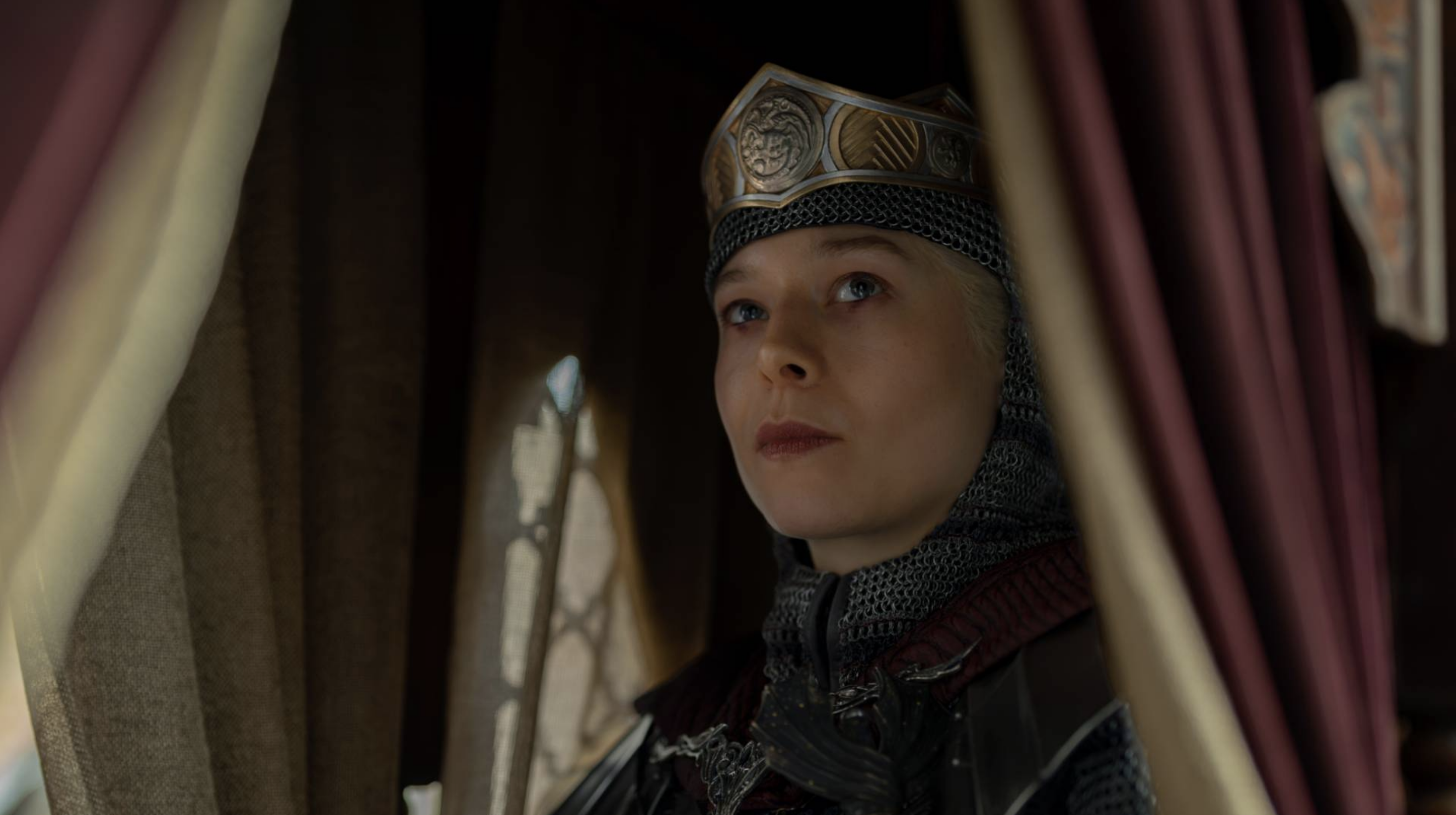
Love it or hate it, that House of the Dragon season 3 finale was probably not what you expected. While it did end in a battle, it was seemingly not the one that was teased in earlier trailers. But perhaps the biggest surprise for keepers of Westerosi lore (nerds like us) wasn't a battle at all but a speech - specifically, the climactic pronouncement that Queen Rhaenyra makes of being "the Prince that was Promised." Now, the concept itself does come directly from George R.R. Martin's A Song of Ice and Fire novels, but the moment of the speech itself is an invention of the series.
And for those of us confused, House of the Dragon's own showrunner is here to clear things up.
That showrunner is Ryan Condal, who spoke to journalists including representatives of TV Insider for an article published August 11, just two days after House of the Dragon's third season finale premiered. Before we get into that, though, here's a little bit more context: as part of the Westeros universe, the events of Martin's Fire & Blood novel are technically affected by the prophecy of "the Prince that was Promised," a messianic figure who will unite the Kingdoms against their greatest threat in a time of need. Game of Thrones fans know that that figure will eventually be revealed as one Jon Snow.
They'll also likely know that, not only does the prophecy never point to Emma D'Arcy's Rhaenyra, but Rhaenyra herself never canonically makes the claim of being the person to fulfill the prophecy. And by the way, Ryan Condal isn't claiming that at all.
The showrunner says the added speech was "something that is certainly not in the book, and it’s not in the history, but there is a bunch of talk about how Rhaenyra became very despotic, and became a tyrant at the end, and was very unpopular with the people."
Still, argues Condal, though the event doesn't make it into the actual text, it would've made sense in the context of the Targaryen history therein.
"We saw it as this could just be something that happened," continued Condal, "And there was disagreement over exactly what it was, so it didn’t make the historical record [...] My glib toss-off from the historians is, oh, well, Targaryens say crazy s**t all the time. But so much of their existence is this self-aggrandizement.
"For the people," the showrunner concluded, "For the stonemasons standing there in the crowd just looking up at this, it could just sound like somebody trying to make something of themselves, because they have no idea of all the quote-unquote real history that went into Rhaenyra making that speech."
House of the Dragon season 3 is streaming in full now on HBO Max.
A Knight of the Seven Kingdoms season 1 may have wrapped on HBO Max, but with House of the Dragon season 3 coming just around the corner, it's always a great time to read up on all things Game of Thrones. Fortunately, Popverse has everything you need to journey through the George R.R. Martin-created Westeros, including:
- Popverse's Game of Thrones watch order
- How to read George R.R. Martin's Game of Thrones series in order
- The biggest differences between The House of the Dragon and Game of Thrones
- The history of Westeros's greatest houses & families
- Every single dragon in The House of the Dragon so far
Plus much more coming as it gets announced!
Follow Popverse for upcoming event coverage and news
Find out how we conduct our review by reading our review policy
Let Popverse be your tour guide through the wilderness of pop culture
Sign in and let us help you find your new favorite thing.












Comments
Want to join the discussion? Please activate your account first.
Visit Reedpop ID if you need to resend the confirmation email.