If you click on a link and make a purchase we may receive a small commission. Read our editorial policy.
Michael Cho talks Jack Kirby, Darwyn Cooke, and the power of two tone coloring
Michael Cho pulls back the curtain on his art style, who he looks up to, and how he explains his job to his kids

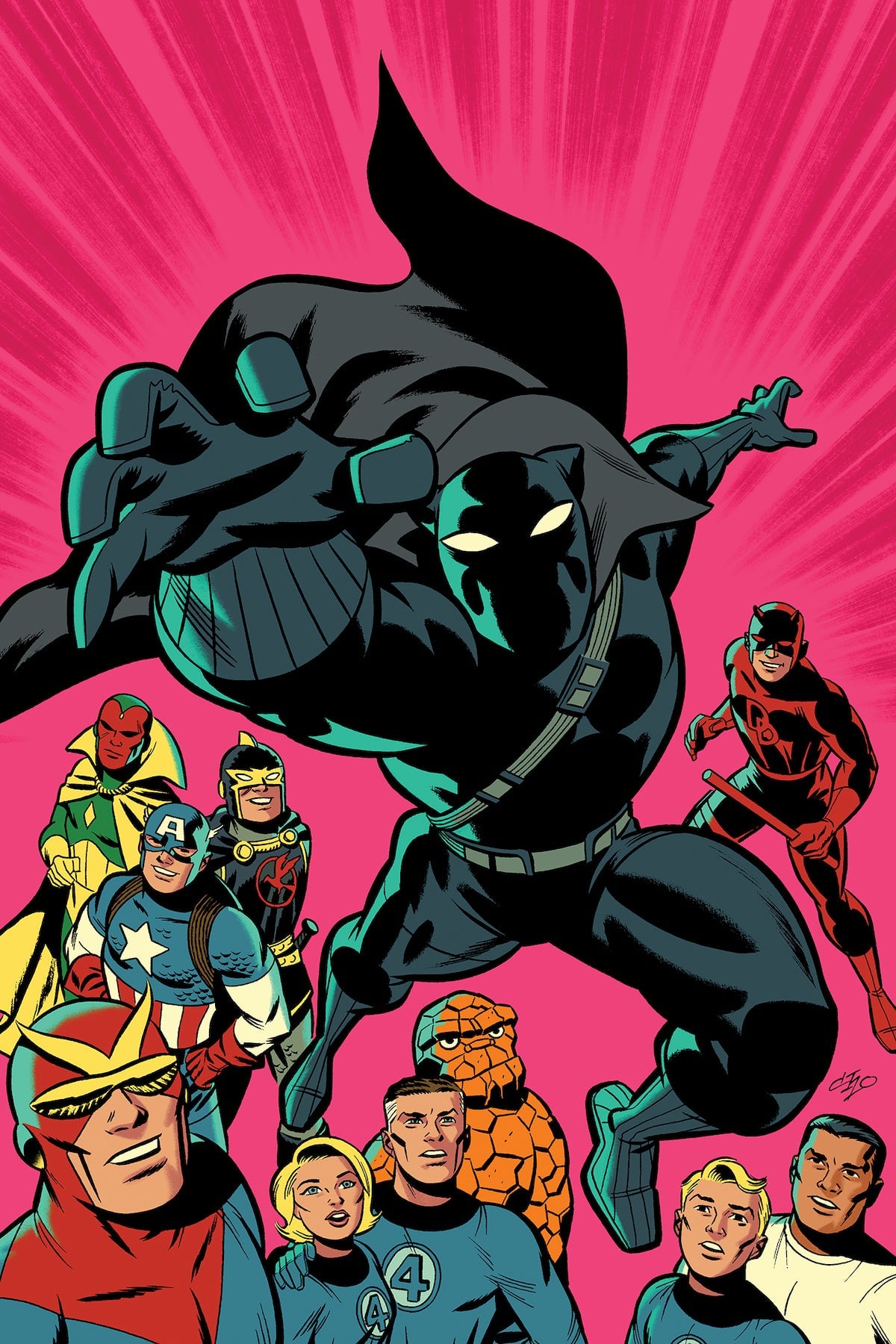
To the average person trying to create a picture full of action and emotion and fluidity, the use of flat color – let alone only two flat colors – seems counter-intuitive. After all, don’t we need a full spectrum to create anything resembling what emotions truly feel like? When it comes to artists like Michael Cho, it’s clear that the average person simply hasn’t reached deep enough to see just how powerful two-tone art can be, and how contemporary the past can feel when you’re willing to pour yourself into it.
Popverse sat down on a tired Sunday afternoon with Cho at Fan Expo Portland to discuss his beginnings as a contemporary painter, emotion through lighting, and whether or not his kid thinks him doing work for the New Yorker is cool.
Popverse: We chose the end of the show to do this and now we’re both a little punchy, huh?
Michael Cho: It's not the end but it is the end. But yeah. Oof.
You've done everything across all different sorts of publishing. How did you end up in comics of all places? What had you landed there?
Yeah. It's a weird one. I came out of school to be a contemporary painter. So I was broke. Dead broke.
As contemporary painters tend to be.
Yes.I went to art college to study Contemporary Art, so I was doing installation work. You smash pottery and leave it in a pile on the ground, and then you do a weird sound poem around it.
[laughs]
But I was broke! And there was a neighbor of mine – I was living in a converted warehouse at the time – , and she said, "There's a theater company down the street looking for illustrators. You're an illustrator, right?" I had no training, so I said, "Yeah."
[laughs] “I can do anything if you can pay my rent!”
Exactly. I lied my way through the thing and showed my stuff. So then I started doing theater illustrations, which led to doing book illustrations because a friend of mine wrote a book and was like, "You want to do some drawings for me?" I was working in what I thought was my field – which was illustration– for a long while. But the thing is, I live in Toronto. And in Toronto there's a huge comics community, not just of comic fans, but professionals.
Famously so, in fact.
A lot of the artist friends that I had were comic book artists. And I'd draw in a style that's very comic booky in the first place. They were like, "Dude, you're a comic nerd and you also could draw this. Why don't you try drawing comics?" I did a bunch of indie comics and things like that, and that led to me being invited to conventions and things. Back in the day, they used to put your name on a poster without telling you. And then if you didn't go, people would be at another con, they'd be like, "Why weren't you at this con?"
To be fair, apparently they did that to some people here.
See? Keeping up tradition. So one day they put my name on a poster and I went, and then I cried at that convention because it was so sad. [laughs] But I soon developed calluses on my soul! And then I was drawing children's magazine work, and then that led to me doing some children's comics, which then I started after that I put out a graphic novel and that's when I started getting approached by a company to do stuff like comics or covers and things like that.
Well with those comic companies I can see why they’d approach you. Personally I look at your work and see Darwyn Cooke, Bruce Timm, Alex Toth. How did you land on this particular style for yourself?
It's just the way I draw. Darwyn was actually a really close friend of mine. We were neighbors. We lived five blocks from each other. He was one of those guys in Toronto. If you look at this badge – [Cho shows me the art on his convention badge] This is Darwyn's drawing. The original version of this artwork [he pulls out his phone and shows me the original Cooke art, which has a cartoon version of Cho drawn in.] They edited me out of this batch.
That’s so cool! And also really tragic, honestly.
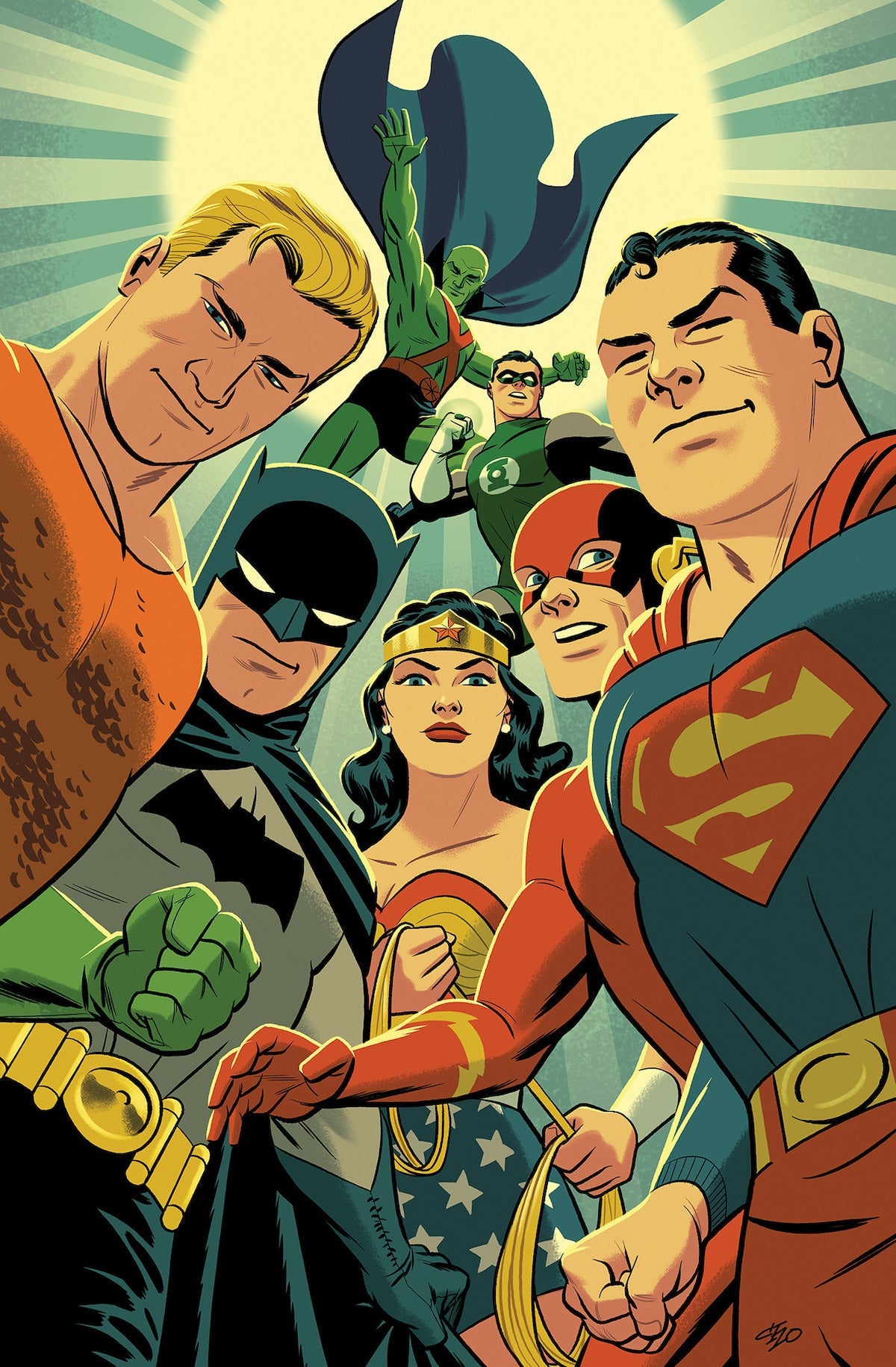
Right? But yeah, Darwyn and I, we kind of drew similarly. I get compared to him when I do DC stuff. In fact, the first DC assignment I ever got, it was for the Justice League, and he drew that to death of course. So I showed it to a friend of ours who's also a friend of Darwyn's, and I said, "Hey, here's my cover for this Justice League book. What do you think?" And he's like, "It's good." And I was like, "Does this look like Darwyn's?" And he was like, "Yeah, it kind of does." And it's because we draw kind of similarly. [laughs] So especially when I draw stuff that he draws, like Green Lantern, then it's going to look like that. But really it's just the way I draw. I have a lot of influences. We have similar influences. I love Jack Kirby. That's my main guy.
Can’t touch comics without Kirby being #1, really. That only makes sense. I can totally see that in your work.
Exactly. And when I draw retro stuff, that stuff comes right to the surface because that's the way I think about that.
Sure. And with that retro sensibility, you work a lot in two tones as well. I've seen you kind of talk about how that's a good way to translate emotion for you. Can you tell me a little bit about how that translation works?
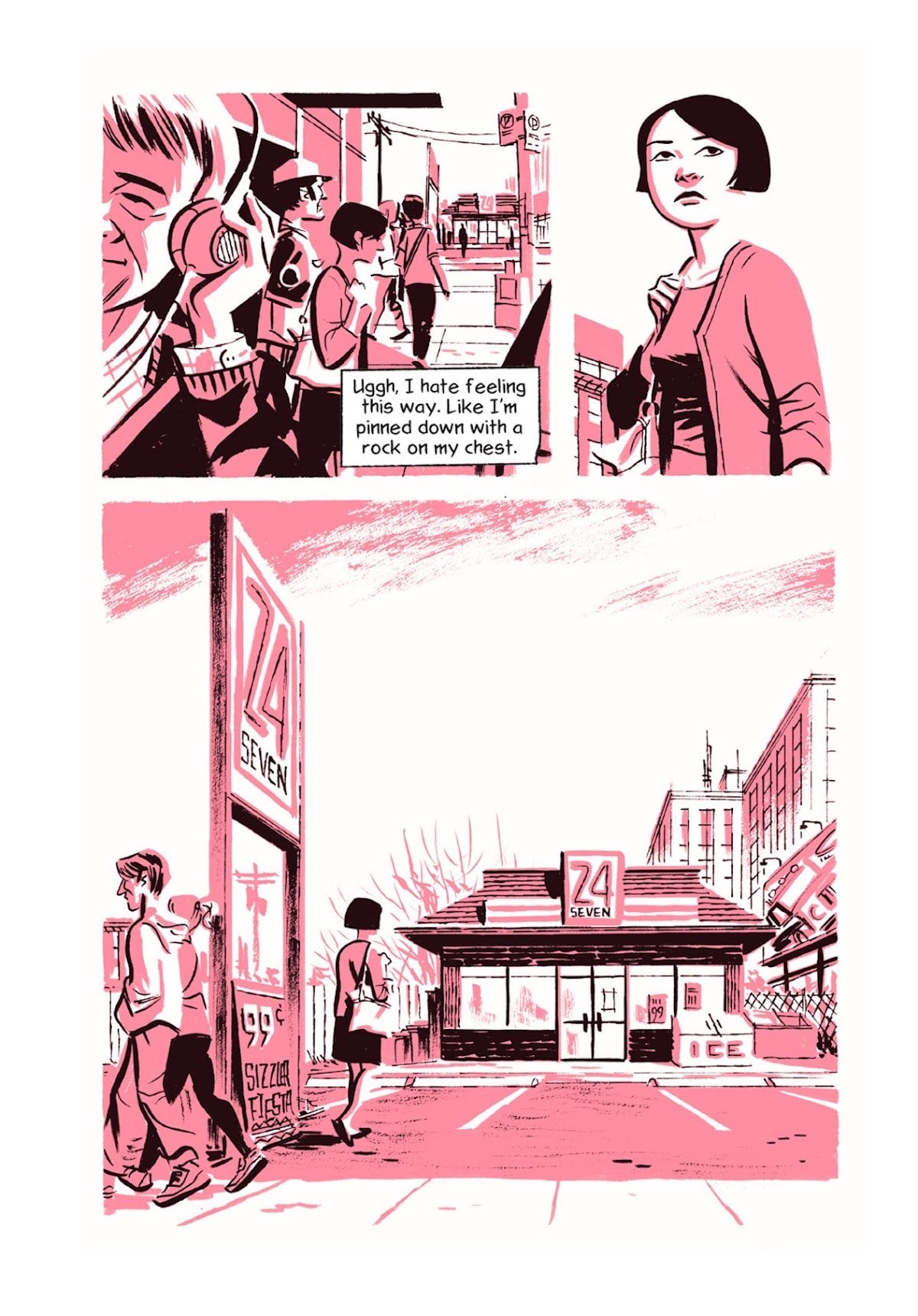
Oh totally. What happens is that when you are working in color, there's a lot more choices and decisions. But when you strip out color, then I find that working with a limited structure gives you actually more freedom in some ways, especially if you take out balance and color out of it and you just have it in one color, then what happens is you get to concentrate on lighting, which creates a lot of emotion.
I find that lighting more than anything else creates emotion. Other than expression, there's a lot of ways to create emotional depth in work. Some people do draw in a very expressive style. I'm not on that side of the spectrum, so I create using lighting.
Does going with more of a two-tone and more deep, flat, vibrant colors ... do you think that changes how you go about working with figures overall?
In what way?
Well like…with movement, with facial expressions. Things like that. Or do you try to let the colors do more of the expression rather than worrying about the details of the face and details of the body language?
No, I care about all that a lot, in a different way. I actually spend a lot of time when I'm drawing comics working out the position of an eyebrow to get across subtle emotions. I did a graphic novel where a lot of the emotional content of it is internal, and you have to try to express that, and I try to combine all that. I try to come up with a composition. Let's say, someone's feeling very isolated and lonely, then I'm trying to figure out a composition that conveys that. But also you have to give body language.
The other thing is also facial expression. If you do basic stuff – someone's angry, someone's happy – that's one thing. But the other thing is to show complex self-questioning or things like that.. That kind of stuff requires figuring out good acting. I have a shaving mirror attached to my drawing board so I would try to figure out expressions. And then afterwards I would tweak things for an hour trying to figure out exactly where to put the eyebrow or something to convey emotion and things like that. But my thing is I don't ever want to draw a shot of six people posing and gritting their teeth. That shit to me is always the most lame thing ever.
Just boilerplate group expression?
Yeah. I've seen pages at times where the X-Men are on a jet or something and then they're all having dialogue. And each of those dialogue things are expressing something about the character, but the artist has just drawn six people gritting their teeth looking tough. And I'm just like…that stuff's boring to me. I find it harder to draw. I'd rather try and work out how to express these people's personality. What kind of actions could they be doing that is outside of script, that's on the written page that portrays something about their mental state or something else that shows adds visual interest to the image? That stuff's really important.
And how does that translate when it comes to your relationship with superheroes versus your relationship working on more indie characters?
It's all one big spectrum to me. I love comics as a medium. Some people view comics to mean superheroes, and then there's a contingent that says it's not. And I grew up in Toronto. For example, we have a large enough comic community of creators that some people work on indie stuff, some people work on superhero stuff and some people drift between the two. And when I was starting out, I would show my little indie comics to friends of mine who were superhero artists. And they could still critique it and appreciate it and such because an artist isn't just limited by what they do, their influences and what they like is far broader to what they just put on the paper.
One of my biggest influences as a kid was David Mazzucchelli, who of course was the one that showed me that when I was a kid, that I liked superheroes. And I also liked personal slice of life fiction and things that are non genre work. And when I saw his stuff, I was like, oh, you can do both. You can be great at both. You don't have to pick a link.
There's a part of me that when I draw superhero stuff, I'm appealing to the 12-year-old side of me. That's where I get the excitement from and I try to make that guy happy. And then there's another part of me that when I draw and write stories that aren't in that vein, that it's appealing to a more morose adult.
Yeah, sure. Pretty common for those of us who grew up with all of those comics in the '80s and '90s that were very weirdly human on both fronts.
Yeah. I loved superhero comics. And then when I was a teenager, I got into the Hernandez Brothers and Dan Clowes and that stuff changed my life and thinking about comics too. And I like to merge all of that. I don't think that I have to pick a side. And quite frankly, you don't have to these days. Back in the day, you had a choice: you had indie comics guys, and then you had superhero guys. Now it's wide open. You have people making web toons. You have people making their own work on Kickstarter. And other people are like, "Oh yeah, I just post my stuff on Instagram." And it's a medium. There's no right way to do comics. And if anybody tells you that they're wrong. They're already outdated.
Can you tell me a little bit about, honestly, just how your day goes as a creator? I know you have kids too. Even just working on something more static like a book illustration versus doing something sequentially. How do you lay out your day with all of that in mind and a family to balance?
[laughs] When I was in my twenties and thirties, before I had kids, I used to run by this adage that I work on passion, not on discipline. Like I do what I'm passionate about, and then when that's burned out, that's when I take a break. I could do 16 hours a day or something. But then when I had kids, I learned that you can't do that, so what I learned was discipline. [laughs]
I spent a month literally learning project management and that kind of stuff. What I do is at the end of every week, I take one hour at the weekend and I close up all the loopholes that were left over from the week before, like contracts that had to be signed, emails that I pushed aside to the weekend, check out what invoices I sent in that didn't get paid yet, write letters to those people to send on the Monday and stuff like that. And then I sit there and I plan the next week and I set it going.
And having done this for long enough time, I know how long something takes. I sit there and go, for the first four days I am roughing out this cover. And then while it's in turnaround and being approved, I'm switching to this. And I generally set aside one creative task a day and a bunch of little office related tasks because I find that I can't switch gears very easily. If I'm working on a cover that day, I cannot switch gears and switch to another cover.
It's like a left brain, right brain thing.
Yeah, and I'm carrying two different images, two different ideas in my head, and so I can't get either one down. As I'm drawing one thing, I'm thinking about the other thing and that thing's getting screwed up. I'm very, very practical and organized about this stuff. This is my creative time to do this, to come up and brainstorm and come up with ideas. And then when I have a free hour during that day, I take care of all the emails and read the research stuff, that kind of stuff. And then I check it all off on my little calendar of what I did that day. And then the next morning I write down a list of what I'm going to do, and I check those all off during the next day.
Man. You have it all laid out nice and neat.
Yeah, it's super boring compared to my punk rock 30 year old self [laughs]
Oh trust, I remember the days of 'I'm going to work until I don't feel like working anymore and then it’ll all be fine.'
Exactly. And I'm going to do it until I'm burnt, because I got this passion to do this. I got to get this out. And then when you have kids, there's no chance.
No more staying up until 4:00 AM because you felt the passion of the day?
I do stay up until 4:00 AM because I'm still a night person because I prefer to work in the evening because then I don't have the interruptions of kids and stuff. But I've always been naturally a night person. It's one of the reasons why years ago I joined Twitter. But back in the day what it was, I would have friends who lived in Austin, Texas and another friend who was in Portland or something. But we were all up at 3:00 AM and when you're working in your studio and you're just taking a little break, you just want to chat with them for a second.
Yeah. All the creatives are up at the wee hours of the morning, just like, 'I don't know, man, something came to me.'
Yeah, exactly.
Do your kids think that what you do is cool?
It kind of varies on the project. I have a 14-year-old daughter and I have a seven-year-old. My daughter's a great artist. She's fantastic. And my wife is an award-winning designer and children's book author. But we always drew. I had to tell her at one point, "Kiddo, other moms and dads are not like this. They have normal jobs. We have weird jobs." And my daughter used to think it was fun because I'd go to cons and bring back Harry Potter merch or something. But nowadays, she thinks it's cool when I do something that her friends would like. Like a while back I did some illustrations for Fortnite and I was like, "Should I do this?" And she was like, "Oh, you should do it because it'd be kind of cool, because my friend played that." And my son, it's like if I do Star Wars stuff, he's excited, but if I do something for the New Yorker, he doesn't care.
[laughs] Alright well I realize that I’ve taken up a good deal of your time here and I know people are waiting to talk to you. What is one particular genre, character, whatever, that genuinely just brings you joy to still work on?
Oh man… jaded me's got to think about that.
And that's everybody's answer. [laughs]
The true answer is a boring one. I get excited about all the superhero stuff I do.
Still? That’s great, really.
Yeah, because it still appeals to that 12-year-old side of me. I haven't lost that child. As jaded as I see in real life, I still have not lost that child and I ho pe it still comes through it. When it doesn't, that's when I stop. I have no worries about ever walking away from something. I've done that many times. As you can see from my career, I go into so many different streams that I'm happy to walk away from something if I don't feel the joy in it anymore. That’s what it’s always been about.
Follow Popverse for upcoming event coverage and news
Find out how we conduct our review by reading our review policy
Let Popverse be your tour guide through the wilderness of pop culture
Sign in and let us help you find your new favorite thing.


Comments
Want to join the discussion? Please activate your account first.
Visit Reedpop ID if you need to resend the confirmation email.