If you click on a link and make a purchase we may receive a small commission. Read our editorial policy.
Marvel Comics' The Punisher isn’t a power fantasy ... he’s a tragedy we can’t give up on
Why do so many of us like the Punisher in Marvel Comics and beyond when we disagree with his methods?

Popverse's top stories
- Jonathan Frakes isn’t done with Star Trek, despite what you might have read
- REVIEW: Captain Underpants: The First Epic Manga blends familiar fun with a warm introduction to manga
- Livestream the Daredevil: Born Again, Jurassic Park reunion, Uncharted, Arrow and more panels from Chicago's C2E2 2026
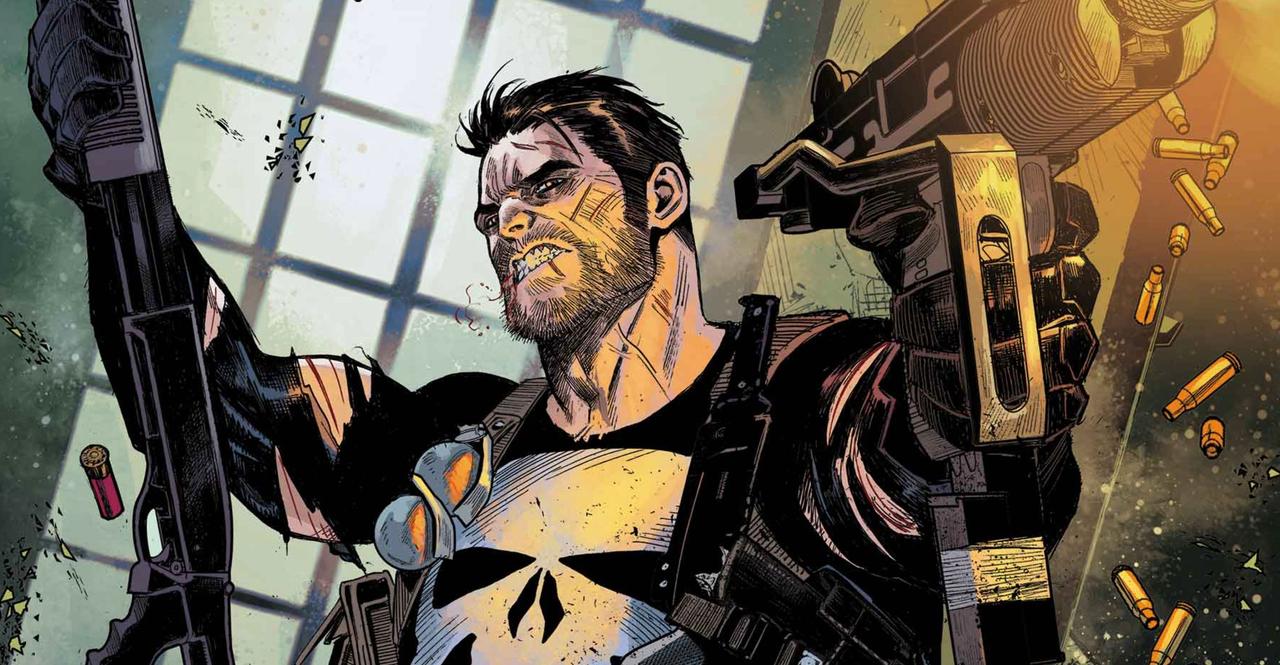
If you overheard me talking about Frank Castle, you might think that I was talking about someone in my own family - perhaps a cousin or brother who was letting me down recently. Because, as shocking as the Punisher is in Marvel Comics, I can't help but feel for the guy and want the best for him. Ultimately, being a fan of the Punisher involves watching a fictional character crash out repeatedly while still clinging to the belief that the guy can turn his life around. The day I lose hope that the Punisher can redeem himself is the day I lose hope that any of us can.
On paper, I might not seem like a Punisher guy. I don't like guns or loud noises, I get nervous when I'm around butterflies because I'm afraid of accidentally hurting them, I believe in restorative justice over capital punishment, I have a favorite Jane Austen book, and I'm a vegetarian. But I'm deeply invested in the Punisher as a character in both comics and television, amounting to a sense of almost emotional ownership over the character. So what the hell do I see in a guy like Frank Castle?
Well, as it turns out, appearances can be deceiving. Like Frank Castle, my grandfather studied to become a Catholic priest at a seminary before he left and later joined the Marine Corps. When I was a kid, and perhaps even now as an adult, my granddad had a warrior mythology to him. Even as an old man, he was strong and had eyes that pierced as much as they danced with laughter. He embodied the intensity of the Marines even in retirement, and just like Frank Castle, carried a conflicted sense of disillusionment with the American military after his service. With the Punisher, I see a darker version of my granddad's Marine intensity within Frank Castle, which is part of why the character feels almost familial to me.
Unlike Wolverine, my personal model of positive masculinity, the Punisher isn't a guy with a checkered past that he's trying to make up for. He's something much more tragic, in that the worst event of his life - seeing his children and wife murdered in front of him at a picnic in Central Park - has sent him on a bloodthirsty tirade against the criminals of New York City and beyond. Frank Castle found meaning at his rock bottom, and he keeps himself there in a prison of his own making in order to keep living. It's a place I'd never want anyone to end up in.
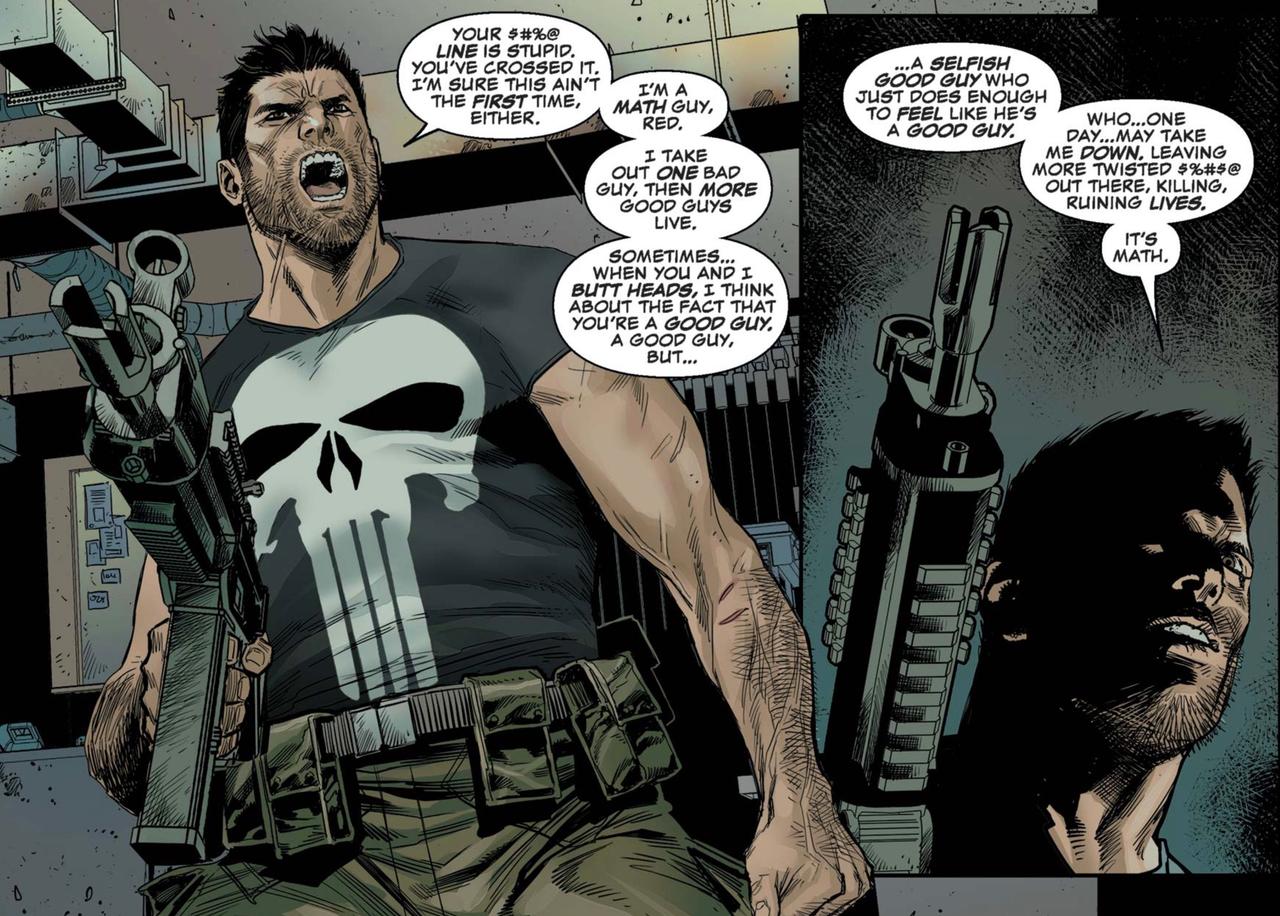
And that, I think, is why so many people are invested in the Punisher's story. He's not a power fantasy so much as he's a tragic figure who we all wish could be rehabilitated. While Wolverine found deliverance as a father figure to orphaned mutants, the Punisher has chosen time and time again to keep digging his hole deeper. But since we're comic book readers, we've been conditioned to believe that people can change. Their morals can adjust to the nuances of the world. We've already seen it happen with Wolverine, so why can't it happen with Frank Castle? We keep reading his comics in the hope that he'll change.
But even when he doesn't change, the Punisher in Marvel Comics and onscreen in shows like Daredevil: Born Again compels all of us. The Punisher's morals have put him in arguments (and the occasional fistfight) with heroes like Daredevil and Spider-Man, both of whose lives have also been tragically changed by gun violence. And seeing these conflicts play out, particularly in the excellent Daredevil #257 by Ann Nocenti and John Romita Jr., has given us the sense as readers that violence is a zero-sum game. One of the most memorable parts of Daredevil: Born Again season 1 was when Jon Bernthal's Frank tearfully revealed to Matt Murdock why he continues to wage his war against crime: "Every time I start moving, I still hear my little boy. I see him. And I hear his voice. He says, 'Get 'em, Daddy. Every single one of them, get 'em.' That's why I do what I do."
And that's precisely it: the Punisher is both a deeply masculine and deeply emotional character. That man is feeling everything, everywhere, all at once. It's how he's able to call out Daredevil for being in denial of his own grief and thirst for violence, in both Daredevil: Born Again and in Chip Zdarsky and Marco Checchetto's Daredevil run. There is a lot of darkness surrounding Frank Castle, but being in touch with his emotions isn't one of those elements. If he only went to therapy, he'd be well on his way to bettering himself.
Despite his rather black-and-white origin, the Punisher has proven himself to be immensely adaptable to a variety of different stories and settings. Whether it's becoming the leader of the ninja group The Hand in Jason Aaron, Jesús Saiz, and Paul Azaceta's run, the Scottish Highlands in my favorite Punisher story, Blood on the Moors by Alan Grant and Cam Kennedy, or in space in Cosmic Ghost Rider by Donny Cates and Dylan Burnett, the Punisher's war is neverending, and neither is our hope for him.
Get ready for what's next with our list to upcoming comics and how to buy comics at a comic shop, and our guide to all the free comics you can get with this year's Free Comic Book Day 2026 and Comics Giveaway Day 2026.
Follow Popverse for upcoming event coverage and news
Find out how we conduct our review by reading our review policy
Let Popverse be your tour guide through the wilderness of pop culture
Sign in and let us help you find your new favorite thing.





Comments
Want to join the discussion? Please activate your account first.
Visit Reedpop ID if you need to resend the confirmation email.