If you click on a link and make a purchase we may receive a small commission. Read our editorial policy.
Awe Talk: Jim Starlin talks death - the death of Robin, Death & Thanos, and if Josh Brolin's Thanos is really dead
Thanos creator Jim Starlin opens up about his historic past and the unanswered questions about his Marvel work, DC work, and his own creator-owned ambitions.


In 1988 Jim Starlin killed Robin. In 1991 he killed half of the Marvel Universe with his character Thanos.
Needless to say, it’s been a pretty eventful career.
If it wasn’t for Jim Starlin, most of Marvel’s cosmic characters and concepts wouldn’t exist. The writer and artist co-created Thanos, Drax, Nebula, and Gamora. He also expanded the lore behind Warlock’s Soul Gem, which introduced the Infinity Stones to the Marvel Universe.
Over at DC, Starlin shocked everyone by killed Robin, although that one was due to a 1-900 phone poll that didn’t work in the Boy Wonder’s favor. Starlin is still an active force in the comic book industry. The legendary creator is currently working on Dreadstar, a creator-owned comic he produces for Monkey Wrench Press.
Popverse recently had a chance to catch up with Starlin, who settled some old Batman mysteries, gave us the scoop on what it’s like on a Marvel Studios set, and shared some cool stories. Let’s dive in….
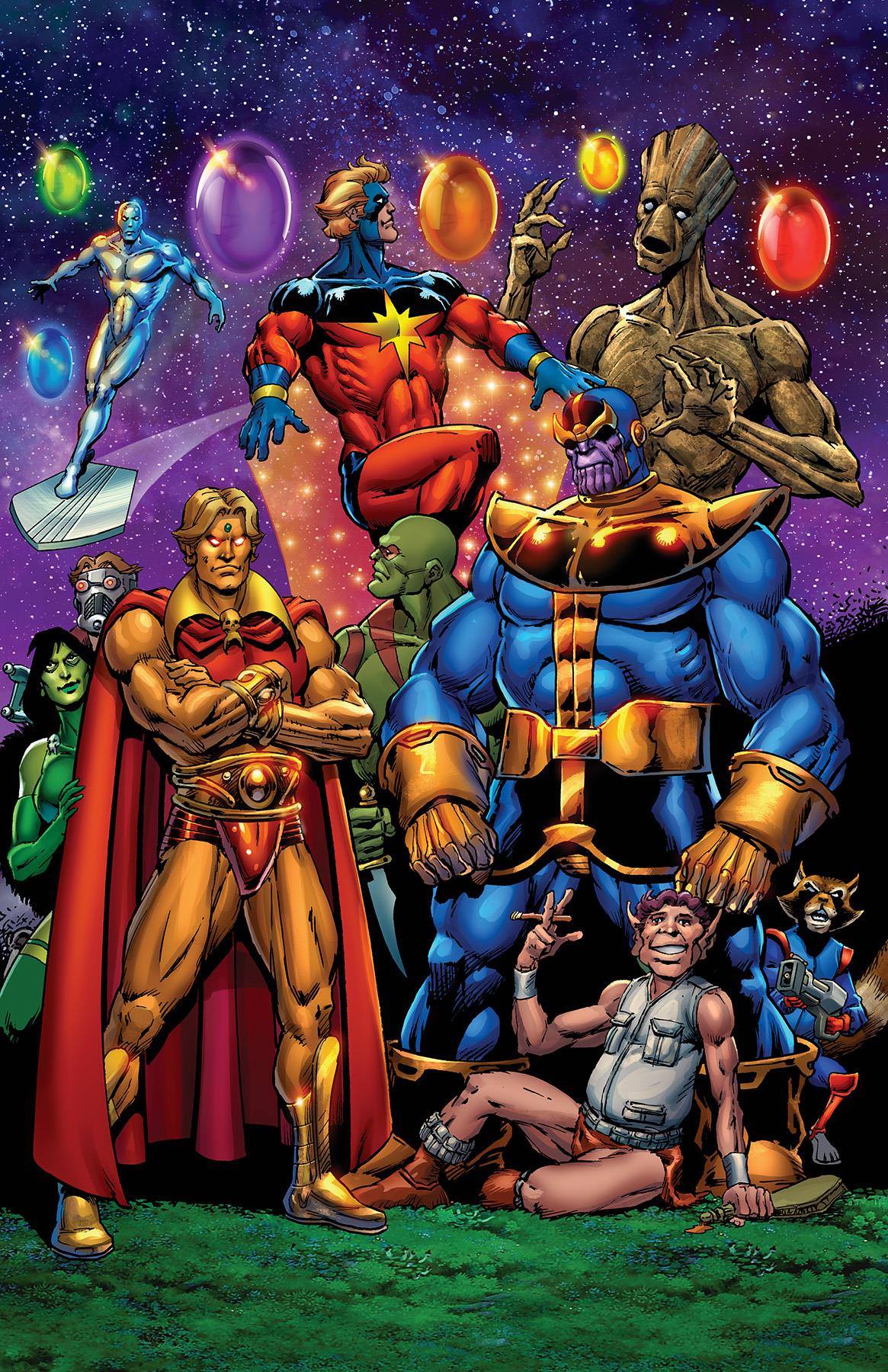
Popverse: You helped reinvent the character Adam Warlock? How did you feel about his portrayal in the Guardians of the Galaxy Vol. 3 movie?
Jim Starlin: Well, his portrayal in Guardians last year was as Him, which was Kirby and Lee's creation, and I figured they were gonna start off that way anyhow., and I wasn't surprised. I don't think we'll see my version of Warlock for another few movies, because they like to build up and from what I read, they gave him a four or five-movie contract. They obviously have plans for him. So we'll see.
You created Thanos in college before ever working at Marvel. How did that come about?
Yeah. There was a psychology class I went to, and they had a guest lecturer come in to talk about Freudian concepts, including heroes. Thanos was the lighter and darker side of human nature, and basically hooked onto the dark side. The lighter side was sort of an afterthought that became a sexual predator down the line.
I know that you later incorporated elements of Darkseid when you developed him for Marvel. Were those elements present when you created him in college?
Actually not. That seems to be this misconception that it was based on Darkseid. If it was any New God, he was based more on Metron, if you look at the visors over his eyes, I was more inspired by him. When both of them came out, they were both on the slimmer side than they are now. They just sort of simultaneously kept getting larger as the years went on. At one point, I think Roy [Thomas] said something about making him big like Darkseid, but you know, he was already going in that direction anyhow. Metron is more of an inspiration than Darkseid.
As someone who has gone on to do numerous creator-owned characters, if you could go back, would you save Thanos for yourself, or would you still give him to Marvel?
It was a different world back then. There was only Marvel and DC, and you signed away your rights when you signed your paycheck back then. There wasn't much of a choice on the matter if I wanted to do Thanos, which is what I wanted to do. I didn't want to do Captain Marvel or Warlock, I wanted to do Thanos. They may have hired me for Silver Surfer or something like that, but it was always a Thanos story that came. I was the only one who did him for the longest time.
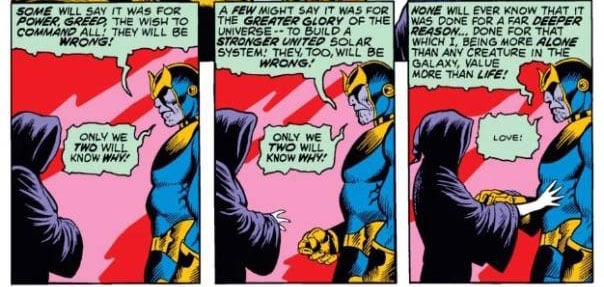
Thanos has a very complicated relationship with Death, which is absent from the movies. How do you feel that changes him as a character, and if you were in the writer's room for those movies, how would you have incorporated Death?
I have talked to the scriptwriters, and in their original version they had Eternity and all the other abstract entities showing up. Feige felt the moviegoing public wasn't ready for the abstract entities, so Mistress Death was pulled out. They took something out of a Silver Surfer story that I wrote to be his motivation instead, it worked. I've come to realize that you don't get a carbon copy of what you do in the books when it goes to the movies. You would be fooled to think you're gonna get that. I think that she may show up down the line now that they have Eternity and a few other characters from the abstract showing in there. As soon as the first movie came out, Josh Brolin started lobbying for another Thanos part. I think they'll be bringing him back fairly soon.
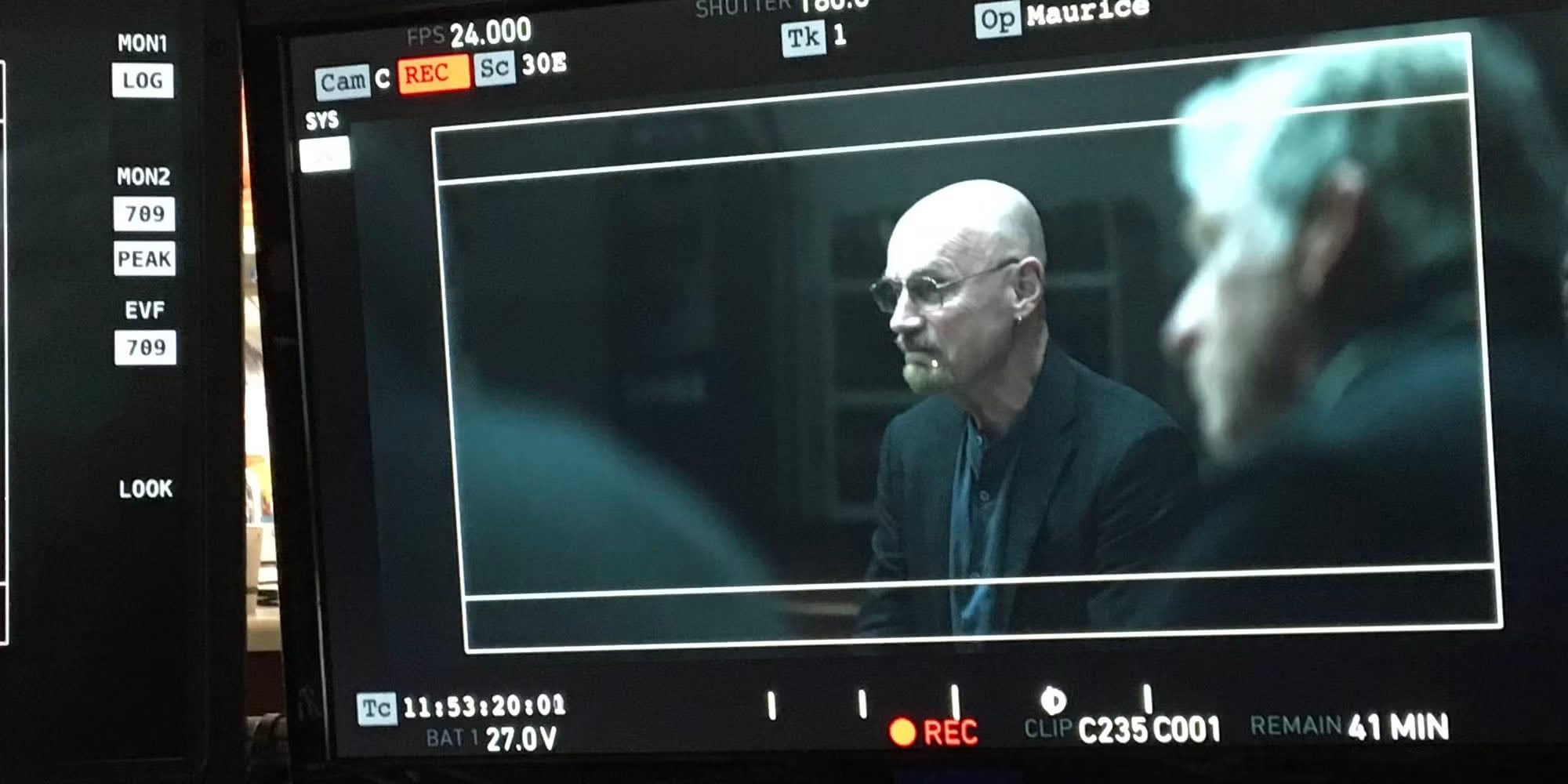
You had a chance to visit the Avengers: Endgame set. You even made a cameo in the film. Marvel Studios is very famous for the lengths they go for secrecy, security, and NDAs. Was that your experience? Did you have to sign a lot of NDAs?
I signed one NDA and then I was treated royally. I had my own trailer for a bit part. I had makeup and wardrobe. They gave me a guided tour of the place afterward. It was one of the better experiences I had as a cartoonist. And in the end, I just never thought to tell anybody about it. Later on when I was at the premiere and talking to Kevin Feige, he said, 'You know, you're the first person I think we've had, who hasn't blabbed about being in the movie.' And I went, 'Oh, that just that just never occurred to me.' I think he said it afterward at the afterparty.
Thanks to the MCU, Thanos has become a household name. Elementary school kids and elderly aunts know who he is. There are tons of memes of him online. As the character’s creator, how do you feel about his prominent place in pop culture?
I went to a bathroom one time and found written over the urinal 'Thanos was right.' When you get to be bathroom graffiti, you've obviously made it.
There have been lots of Thanos memes and parodies. Do you have any favorites?
Not particular, but I have one that I was really annoyed by. When Trump decided to put his head on top of Thanos and snap his fingers and make Democrats disappear. I ended up on CNN denouncing that one.
What do you think is the most misunderstood thing about the character?
He is appetite that cannot be appeased. I've always tried to create characters that had a one-line tag. Ever since I met Jack Kirby and he told me that Hulk was stupidity, and the harder you beat on it the stronger it becomes. Thanos is appetite that cannot be appeased. He's always seeking infinite power. And when he gets it, he loses it in some dumb way or gives it away. And his relationship with this is sort of Sam and Diane from Cheers. They always break up and get back together.
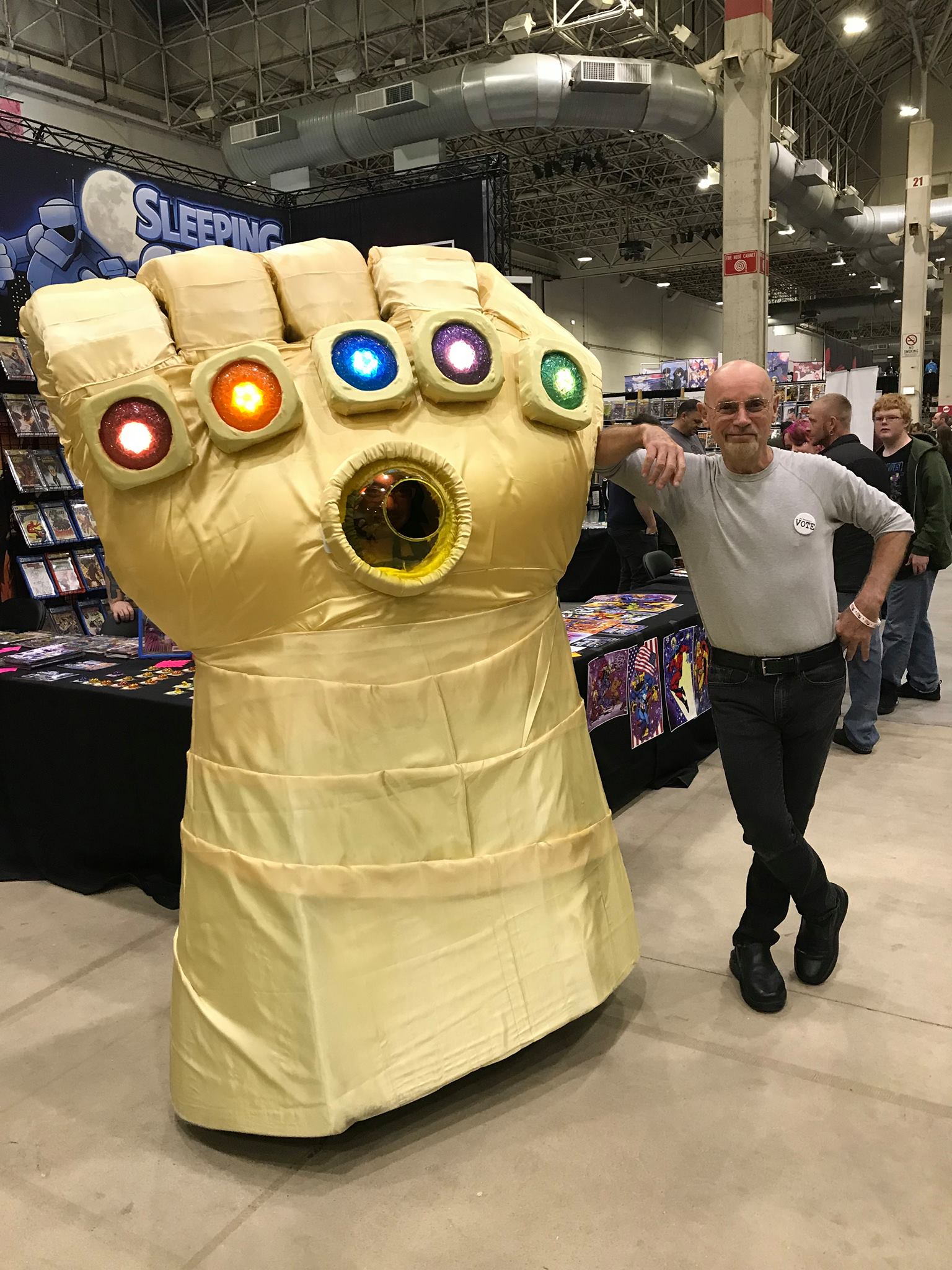
The Infinity Stones have also become a staple in pop culture. Was your original idea for them different when you helped expand the lore behind the Soul Gem?
Gil Kane and Roy Thomas created the Soul Gem and I created the rest of them. They did that in the original Warlock run. I went to a parochial school in grade school and had religion pounded into me on a regular basis. And so, I started questioning as to what a god who is not benevolence, but malevolence would be like. The Stones are basically my way of breaking reality down into six different working categories. I understand they're trying to expand it out now, but I basically thought that this is the universe. Originally, the idea was to put it on his head. I had actually done some sketches of the Stones across Thanos' head. He looked like Brainiac, so let's put them on the gauntlet. It worked much better.
It would've been the Infinity Headband.
That way I can claim to be a clothes designer.
Thanos returned after the Infinity Gauntlet. Could you see the MCU Thanos returning in the same way? How would you pitch it?
As I said before, Josh Brolin started lobbying for another Thanos part, even before the first movies were out. They've made a shitload of money on him, so I expect him to be coming back fairly soon.
We're going to visit another universe now. Crossing over into DC, asking a question that a lot of fans have been wondering since the 80s. 'Ten Nights of the Beast' ended with Batman locking KGBeast in a chamber, where the villain will presumably starve or die of dehydration. In 'Batman: Year Three' Marv Wolfman had Batman say, 'Oh, I called the police afterwards.'
[Laughs] I didn't know that!
What was your original intention when you wrote the scene? Did you intend for Batman to be dooming KGBeast?
He had murdered a number of people in cold blood before he locked him in there. So yeah, I figured that was what it was. I turned Robin into a murderer also. I never thought that Batman should be going out in the gray and black outfit, fighting crime and bringing along a kid in primary colors. I mean, the only thing he was missing was a little tattoo on his forehead saying, 'shoot the kid.' My time at DC was trying to expand sort of where they were at on the characters. I had a nice run. I enjoyed it, whatever they did afterwards is their business.
You just alluded to this, but let's settle it once and for all. It's been 35 years, we're going to settle this Jason Todd mystery. In Batman #424, did the diplomat's son slip, or did Jason push him?
Oh pushed. He was pushed. I thought it was pretty clear.
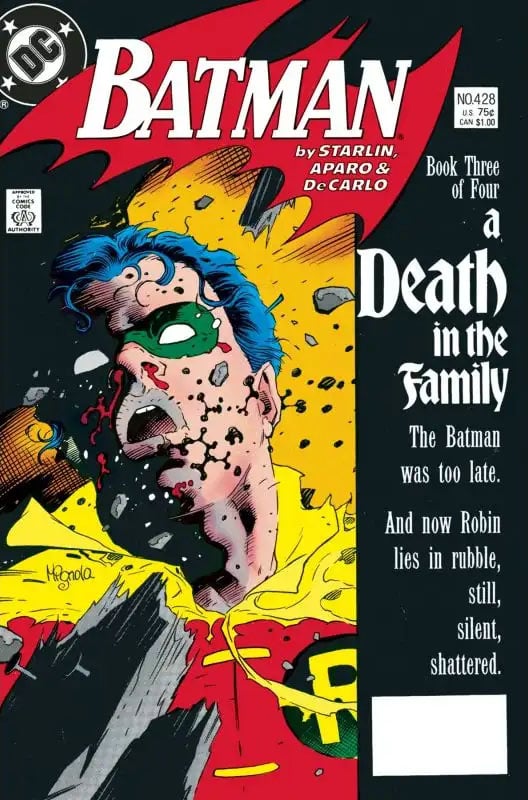
When it came time to write 'Death in the Family,' how did you come up with the how of Jason's death? Was it always going to be a warehouse explosion or were there other scenarios?
It was pretty much that way at the beginning. I wanted that crowbar, because it was so brutal. In fact, it's kind of become more the way people think of him dying is by the crowbar than the explosion. We actually did a thing with the Russos where they did this comic book history thing. We reenacted the scene where this comic book fan comes up to me in a convention and actually wants me to sign the crowbar. We reenacted it with this guy named Robin Lord Taylor who played Penguin in Gotham. We had a great time that day just filming this thing.
If fans had voted for Jason Todd to live, what would have happened next? Did you have a plan for the character and the rest of your run? How far ahead were you writing? It’s interesting, because DC is currently publishing an alternate reality series which explores a world where Jason would’ve survived.
I always thought my readership was a bunch of ghouls, so I never thought he was going to survive. I was surprised that it was as close as it was. It was only 72 votes out of 10,614, so statistically there's a dead heat. I suspect Bob Kane was calling in to keep Robin alive, but there's no proof of that. I had no plans for him. I shortly left the book after that point. There was some controversy with a news article that said that the whole thing had been rigged, which it wasn't. They did an interview with me, and the headline said the whole thing was rigged. If you read the article and interview, I never said anything like that. But that didn't stop the folks from DC from going crazy. My time at DC sort of petered out after that one, even though I had sold their best-selling book that year. But it worked out okay, because I went over to Marvel and did Infinity Gauntlet.
Which gave them a billion-dollar franchise.
[Laughs] DC.
Jason's death and resurrection has played out in animated films and a live-action streaming series on Max. Have you seen any of those and what's your take on them?
I watched the one on Titans, which was a 15-minute death and resurrection. That was kind of abrupt. I haven't seen any of the other ones. I know that there's an animated version of it somewhere, but you know if I'm curious I'll go look it up but I didn't tend to follow too many of the DC stuff.
In 1985, you and Bernie Wrightson produced a comic called Heroes of Hope. It had contributions from Harlan Ellison, George R.R. Martin, Stephen King, and more. Do you have any special stories or memories from that experience? What was it like working with those talented creators.
It was like herding cats. It wasn't too bad. We did two of them. We did one over at Marvel, and we did one over at DC. We were dealing with like 20 or 40 different creators, so egos were always involved there. There wasn't too bad in the Marvel one, but at the DC one this one writer went off to some thing with Cyndi Lauper, and she said, 'All this is just ego for the artists who are doing this.' Meanwhile, we were raising 100 million dollars for the famine relief in Ethiopia. The writer went around and tried talking all the other writers into quitting the book. I was getting calls and said, 'No, no, we're actually doing something. Please stay with it.' I think we even kept that writer in it at the end. But that was a real pain in the butt trying to deal with that.
You haven't done any work with the Marvel and DC for some time. Any plans on the horizon?
I don't do any work for them anymore. It's strictly Dreadstar these days, and I'm doing that with Monkey Wrench Press. I've gotten to a position where I don't have to deal with that, so I don't. I'm much happier.
Do you feel creators are treated better than they were in previous decades?
Oh yeah. I mean, we get our artwork back. Most of the time we're getting a working wage in different periods. I understand that's a little hard now. It used to be that I would hide what I did when I was back in the 60s and 70s. I just didn't advertise it. Now you're sort of a semi-celebrity if you draw or write comics, so it's quite a bit different.
How do you feel about the rise of AI and its impact on the comic book industry?
I'm looking forward to seeing where it works itself into because it's going to be a tool. Trying to pass off an entire piece as your own if it's an AI creation, that's completely wrong. But I can see it being used for other things. In fact, I want to try and use it in some of these future Dreadstar books, using it is as a little AI background. I come from Detroit, where the car replaced the horse-drawn carriage. I've always tried to do additions to the medium. I do a lot of Photoshop work, you know with photos and paintings, and other things in the backgrounds of Dreadstar already, and so I think the next step is just to see what I want to do with using some AI in the books. It's a new tool. I'll give credit where credit is due and say we did AI aides on those particular pages, but I think a complete ban on the thing right now is a waste of time. You're just setting yourself up in history is being another Luddite. I'm curious as to where it's gonna go.
What's the greatest story that you never had a chance to tell? Are there any pitches for Marvel or DC that you had to pivot from or go in another direction that you wish you had gotten to write?
After 9/11, I submitted a Namor over at Marvel and it was about somebody destroying most of Atlantis and Namor going off. And it wasn't a revenge piece, it was a thoughtful piece on how you had to consider more than just your own point of view on any kind of situation. And Marvel sat on it, because they were doing the whole xenophobic anti-Arab thing at that time. They eventually went with a book about Namorr in love and they told me to just forget about my story.
Aside from Dreadstar, what do you have on the horizon that you're excited about?
We're currently doing a crowdfunding thing for a Breed reprint. The entire line of Breed is going to be a nice hardcover volume. I'm getting Dark Horse to become the distributor at the comic book shops for Dreadstar and whatever else we put out at that point. I want to revive Order and Outrage, which I did with Rags Morales over at Dark Horse, but it didn't sell originally well enough to continue it on. I'd like to do a crowdfunding thing where Rags can continue to do it and we can get the three stories out that we want. Because it's a really good story if I do say so myself.
Follow Popverse for upcoming event coverage and news
Find out how we conduct our review by reading our review policy
Let Popverse be your tour guide through the wilderness of pop culture
Sign in and let us help you find your new favorite thing.

Comments
Want to join the discussion? Please activate your account first.
Visit Reedpop ID if you need to resend the confirmation email.